
In accordance with our new philosophy of the purpose "Better being" formulated in 2024, through our products, services, and actions, the ELECOM Group believes both to enhance our corporate value and to contribute to the realization of sustainability for both companies and society. Through our initiatives to reduce CO₂ emissions, in looking toward achieving a decarbonized society, and conserve biodiversity, we will keep striving for sustainable development of companies and society going forward by promoting efforts to address global warming, particularly in terms of making effective use of resources and developing eco-conscious products.
The ELECOM Group is promoting sound business practices in order to harmonize and balance activities to conserve the global environment with activities to manage the planning, development, manufacture and sale of IT lifestyle products.
The ELECOM Group promotes educational and training activities to enable each and every Group employee to understand the Environmental Policy, and to put it into practice in all areas of the business. In addition, the Group uses documents and other measures to publicize the policy among external stakeholders, requesting their compliance and cooperation.
| Company-wide Introduction Study Group | Waste Management and Public Cleansing Act Study Group | Rechargeable Battery Development Special Study Group |
| Mid-career Hires/Transferees Study Group | Overseas Shipment Special Study Group | Training for Persons in Charge of Compliance Assessment |
| Development/QA Special Study Group | Environmental Internal Audit Seminar |
The ELECOM Group has established and operates its environmental management system (EMS) pursuant to environmental management regulations stipulated based on its Environmental Policy. We comply with laws, regulations, and other rules related to environmental activities associated with our business and operate our environmental management system, which has been granted certification under the ISO 14001 international standard. This enables us to thoroughly manage various environmental risks associated with our business activities and strive to reduce environmental impact. In promoting these efforts, the ISO 14001 Secretariat works with the Sustainability Committee to promote environmental measures and the development and sale of eco-conscious products. This entails implementing the plan-do-check-action (PDCA) approach in regularly evaluating the impact of our business on the environment and the disclosed results of initiatives to address climate change. The Group strives to achieve continuous improvement in this regard by conducting internal audits and carrying out in-house awareness-building and education activities, while otherwise engaging in environmental activities for facilitating decarbonization and resource conservation, enlisting the entire Group.
| Targeted companies | Unit | FY2021※ | FY2022※ | FY2023※ | FY2024※ | FY2025 | |
|---|---|---|---|---|---|---|---|
| Number of environmentally related fines | ELECOM Group | Fines | 0 | 0 | 0 | 0 | 0 |
| Total monetary amount of environmentally related fines | ELECOM Group | Yen | 0 | 0 | 0 | 0 | 0 |
|
|||||||
Details regarding acquisitions of ISO 14001 environmental management system certification is as follows (as of March 31, 2026).
Percentage of Group companies (Japan) that have acquired ISO 14001 certification: 26%
| Management system | Company name | Date of initial registration | Business offices | Description |
|---|---|---|---|---|
| ISO 14001 | ELECOM | February 3, 2006 | Head office | To set up the Product Development Division at the head office |
| ISO 14001 | Logitec INA Solutions | April 27, 2005 | Head office: Ina Factory | All factories and Product Development Divisions |
| ISO 14001 | DX Antenna | December 17, 1999 | Seishin Technology Center | As quality assurance divisions and development divisions are included |
| ISO 14001 | Nippon Antenna | June 22, 2001 | Head office, Kawasato Factory, Ishinomaki Atex | Applies to Manufacturing Department |
Supply of electricity generated from renewable energy sources
At facilities owned by the ELECOM Group, solar panels are installed for on-site self-consumption and sales of surplus electricity, providing electricity from renewable energy sources.
At Tescom Denki Matsumoto Factory, an on-site self-consumption solar carport (carport-integrated solar power generation system) was newly established, and self-consumption of generated electricity began in late March 2026. The aim is not only to reduce electricity costs by using renewable energy but also to strengthen BCP (business continuity planning) by facilitating continued operations during disasters or power outages. The basic policy is to consume 100% of the generated electricity internally without selling it. However, due to factors such as weather and operational conditions, actual utilization is expected to be about 60% of the generation capacity, and since electricity needs to be purchased at night, it is estimated that approximately 40% of the factory's total electricity needs can be met through on-site generation.
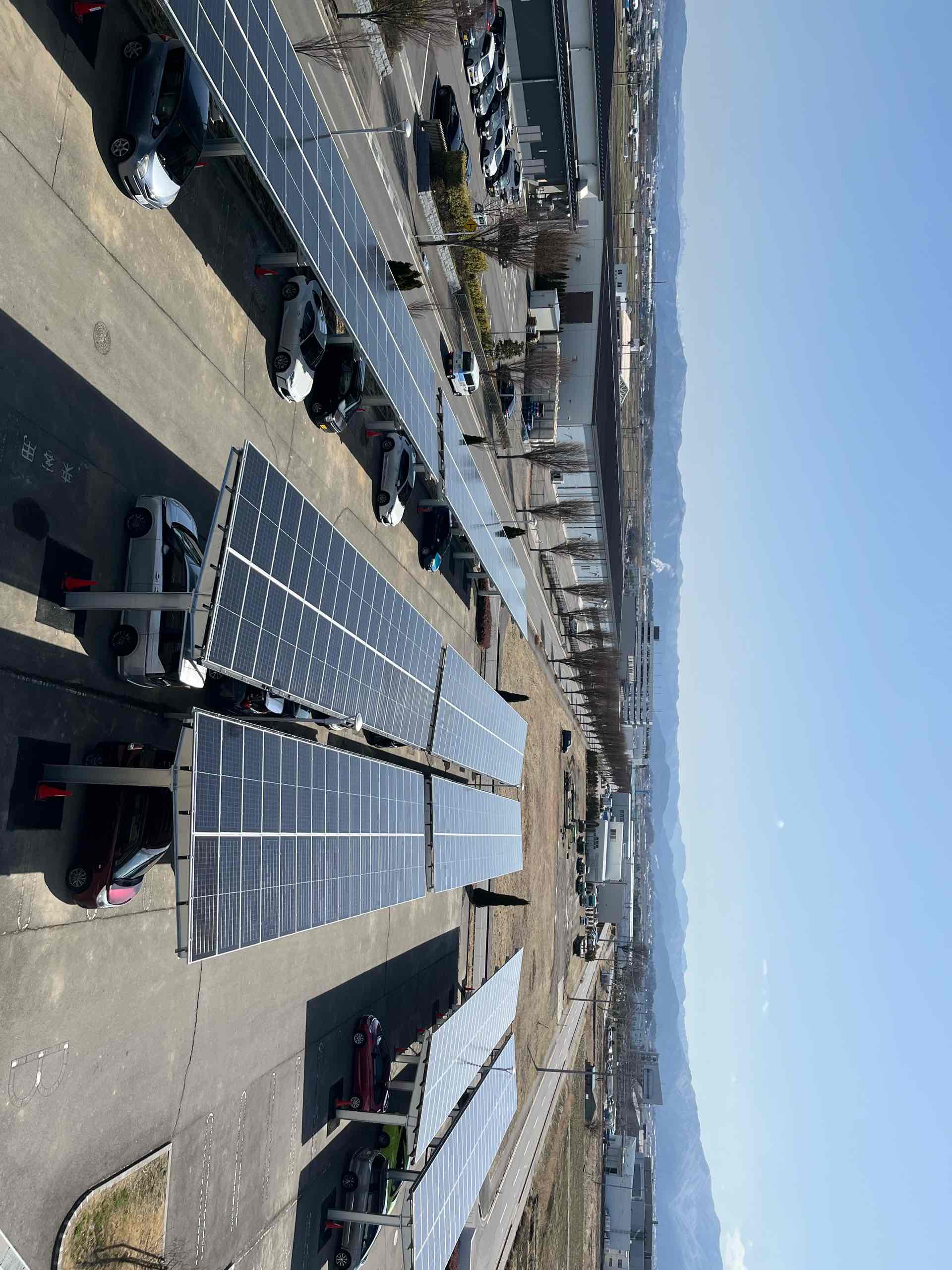
Carport-integrated solar power generation system
(Tescom Denki Matsumoto Factory)
In April 2022, the ELECOM Group declared its endorsement for recommendations of the TCFD*. Positioning climate change as one material issue that has a significant impact on the sustainable growth of the ELECOM Group, we aim to achieve sustainable growth aligned with the notion of a decarbonized society by analyzing the risks and opportunities that climate change imposes on our businesses and accordingly applying such findings to our business strategy and risk management. Furthermore, in 2023 the ELECOM Group set a goal "to reduce CO₂ emissions (Scope 1 + Scope 2) by 50% relative to levels of FY2020 by FY2030 and to aim to achieve carbon neutrality by 2050 through our business activities and in alignment with the worldwide target, while also working to reduce CO₂ across the supply chain" and are currently advancing initiatives to realize a decarbonized society. (For the status of our progress towards goals, please see "Metrics & targets.")
Moreover, in 2024, we newly formulated our purpose. Based on our philosophy of "Better being," the Group is pursuing better products, better services, a better company, and a better society, while pursuing our response to climate change, one of the biggest issues facing the world.
*The Task Force on Climate-Related Financial Disclosures (TCFD) was established in 2015 by the Financial Stability Board, which is an international organization that seeks to ensure stability of the financial system. The TCFD makes recommendations for ensuring stability of financial markets by promoting a transition to a decarbonized society, through identifying and disclosing financial effects of corporate business risks and business opportunities attributable to climate change.
The ELECOM Group aims to consistently contribute to the realization of a better global environment based on its purpose. In seeking to address sustainability issues including those related to climate change, we established the Sustainability Committee in 2021. The Sustainability Committee is tasked with identifying risks of sustainable business activities impeded by climate change and various other factors, recommending new business opportunities derived from climate change, making decisions on materialities, KPIs and other important matters, checking on progress in that regard, and drawing up countermeasures. As appropriate, the Sustainability Committee furnishes reports on sustainability activities, including those involving climate change, to the Board of Directors, which monitors and oversees such activities.
As of June 30, 2026
The ELECOM Group's strengths seemingly include its product development and procurement capabilities in terms of promptly addressing market demand and trends, as well as the Group's robust supply chain equipped with sales agility and logistical capacity in delivering such products to customers in a timely manner. At the same time, with the exception of some group companies, the ELECOM Group's in-house CO₂ emissions are limited given that it does not have its own manufacturing facilities. On the other hand, we recognize that the Group's medium- to long-term business risks and opportunities are considerably affected by challenges related to climate change given a tendency for substantial emissions with respect to its manufacturing subcontractors and transportation. In line with the TCFD recommendations, based on climate change scenarios in accordance with the Paris Agreement, we identified major risks and opportunities, and explored countermeasures in that regard, assuming a scenario pursuant to the Sixth Assessment Report (AR6) of the Intergovernmental Panel on Climate Change (IPCC) released in 2022 and the Net Zero Scenario of the International Energy Agency (IEA), as we engaged in initiatives to address challenges related to climate change underpinned by our Environmental Policy. Results reveal that the need for us to address climate change and increasingly stringent regulations associated with climate change could potentially undermine these strengths, which have been cultivated over many years. Meanwhile, our active efforts involving mitigation and adaption with respect to climate change strengthen the resilience of the Group and have revealed the emergence of opportunities in terms of providing products and solutions for facilitating customer decarbonization initiatives and in terms of cutting costs of the ELECOM Group.
We will continue to formulate strategies for the ELECOM Group, aiming to create a better global environment and local communities, as stated in our new purpose "Better being," which was formulated in 2024.
(2°C and 1.5°C or less scenario)
(4°C scenario)
| World in the scenario of temperature increase of 2°C or less |
World in the scenario of temperature increase of 4°C |
|
|---|---|---|
| Procurement activities |
|
|
| Product development activities |
|
|
| Sales and office activities |
|
|
| Logistics activities |
|
|
| Stakeholders |
|
|
Reference of the scenarios: SSP1-2.6 (2°C or less scenario), SSP1-1.9 (1.5°C or less scenario), IPCC/RCP8.5 (4°C scenario), IPCC/RCP2.6 (2°C or less scenario)
| Classification | Impact on our business | Occurrence | Impact | Initiatives and response status | ||
|---|---|---|---|---|---|---|
| Risks | Transition risks | Government policy & laws and regulations | Increase in costs associated with imposition of carbon pricing | M | Major | Set reduction targets for Scope 1 and Scope 2 emissions and continue efforts to achieve these reductions |
| Increase in electricity costs associated with burdens of investing in renewable energy | S / M | Continue efforts to conserve energy at logistics centers Install solar power panels at company-owned facilities | ||||
| Delivery costs rise amid the need to comply with new energy conservation law imposed on carriers | S / M | Consider improving delivery efficiency, such as verification testing of the Shuttle Line Of Communication (SLOC) | ||||
| More stringent regulations imposed with respect to tracking and reducing GHG emissions across the entire supply chain | M |
Begin tracking of Scope 3 emissions and evaluation of the environmental impact associated with business activities Begin tracking of the status of renewable energy adoption among suppliers |
||||
| Markets | Decrease in sales of products not deemed eco-conscious | M | Major | Continue to review the standards for "THINK ECOLOGY" products and expand the range of eligible products | ||
| Contraction of existing markets | M / L | Expand initiatives into new business areas, such as dematerialized services and Phase-Free products | ||||
| Reputation | Loss of trust due to slow response regarding an eco-conscious approach | M | Moderate | Set reduction targets for Scope 1 and Scope 2 emissions and continue efforts to achieve these reductions Continue to review the standards for "THINK ECOLOGY"products and expand the range of eligible products |
||
| Investment withdrawn by investors due to slow response to climate change | Set reduction targets for Scope 1 and Scope 2 emissions and continue efforts to achieve these reductions | |||||
| Technology | Introduction of eco-conscious technologies and handling of materials for products | M | Moderate | Expand use of recycled plastics for products | ||
| Physical risks | Acute | Delays arise with respect to product procurement and delivery due to supply chain disruption associated with intensifying meteorological catastrophes | S / M | Major | Resolve issues and problems identified through business continuity planning (BCP) Promote reduction of supplier dependence on high-risk regions, establishing two logistics centers |
|
| Chronic | Capital investment costs increase due to a deteriorating workplace environment | M / L | Major | Introduce options for working from home and flexible start times | ||
| Productivity and utilization rates of sales locations and logistics centers decreased due to deteriorating working environments accompanying weather anomalies | Implement labor saving and automation at logistics centers | |||||
| Opportunities | Energy and resource efficiency | Decrease in costs due to logistical streamlining | M / L | Moderate | Consider improving delivery efficiency, such as verification testing of the Shuttle Line Of Communication (SLOC) | |
| Decrease in costs through use of uniform raw materials | Expand use of recycled plastics for products | |||||
| Products, services, and markets | Sales expanding due to development of products that align with ecoconsciousness and changes in behavior | M / L | Moderate | Continue to review the standards for "THINK ECOLOGY" products and expand the range of eligible products | ||
| Emergence of more business opportunities that involve affinity with low carbonoriented policies | Set reduction targets for Scope 1 and Scope 2 emissions and continue efforts to achieve these reductions Continue to review the standards for "THINK ECOLOGY" products and expand the range of eligible products | |||||
| Creation of new businesses that contribute to climate change response | Expand initiatives into new business areas, such as dematerialized services and Phase-Free products | |||||
| Resilience | Reduce opportunity loss by strengthening the supply chain | M / L | Moderate | Conduct risk survey for suppliers, including the implementation of self-assessment questionnaires (SAQs) Resolve issues and problems identified through BCP Maintain stable operations through labor reduction and automation at logistics centers |
||
| Greater prevalence of new technologies and new materials with low environmental impact | Expand use of recycled plastics for products | |||||
* S: Short term (2024-2026), M: Medium term (2027-2030), L: Long term (2031-2050)
We believe that procurement of electricity generated from renewable energy sources is an important part of the ELECOM Group's efforts to reduce CO₂ emissions given that more than 70% of its Scope 1 and Scope 2 CO₂ emissions are associated with electricity consumption. Under these circumstances, we have quantitatively estimated the financial impact of such initiatives, premised on the notion that imposition of carbon tax and volatility of fees for electricity derived from renewable energy are among the benchmarks for 2030. These estimates do not account for carbon taxes of nations where manufacturing subcontractors operate even though such taxes are likely to have a non-negligible effect on procurement costs.
| Benchmarks | Unit cost | Transition has proceeded as planned | Transition has not proceeded as planned |
|---|---|---|---|
| Carbon tax | Carbon tax amount: ¥289 → ¥23,050 |
¥19,810,000 | ¥39,620,000 |
| Fee for electricity derived from renewable energy |
Increase in electricity fee per unit: ¥2.2/kWh |
¥5,730,000 | ¥0 |
[Assumptions]
Risks associated with climate change can be considered those arising from restrictions on business activities and increased costs accompanying more stringent policies and regulations, changes in stakeholder awareness, and technological advances, as well as those arising from climate change, such as the intensification of extreme weather events and the chronicity of extreme weather as seen in rising temperatures and other phenomena.
The ELECOM Group takes a cross-divisional approach with respect to compiling data on numerous risk factors associated with climate change. Specifically, the Sustainability Committee, after discussion with related departments, identifies major risks associated with climate change, and evaluates the degree of impact in a three-tiered scale of major, moderate, or minor. After an analysis of the timing of the potential emergence of such risk from short-, medium-, and long-term perspectives, we consider options in terms of engagement policies and countermeasures.
The Sustainability Committee furnishes semiannual and occasional proposals and reports to the Board of Directors, which discusses them as necessary and oversees the status of business execution as one of the business risks of the entire ELECOM Group.
The ELECOM Group set medium- to long-term targets for reduction of CO₂ emissions during the fiscal year ended March 31, 2023. These targets are to serve as managerial benchmarks toward achieving the objective of keeping the average increase in global temperature to at least 2°C or less relative to the pre-Industrial Revolution level. * The targets are set with reference to Japan's NDC based on the Paris Agreement, including the 2030 target submitted in October 2021 and the 2035/2040 targets submitted in February 2025.
In FY2025, we reduced Scope 1 and Scope 2 CO₂ emissions by approximately 500 t-CO₂ from the previous fiscal year, achieving progress of approximately 92% toward the ELECOM Group's target of a 50% reduction by FY2030 (vs. FY2020). In 2025, energy-saving measures contributed to reducing electricity usage, including the consolidation of offices and the conversion of warehouse lighting at the Kanagawa Logistics Center to LED lighting, along with the introduction of occupancy sensors. Additionally, switching to electricity generated from renewable energy sources at the ELECOM Group Tokyo branch office led to a significant reduction in Scope 1 and Scope 2 CO₂ emissions.
From FY2024, the calculation of Scope 3 (ELECOM CO., LTD. stand-alone) began, enabling a more comprehensive evaluation of the impact on climate change across the entire value chain. As a result, we identified challenges in the CO₂ emissions associated with the usage and disposal of products we sell, in addition to emissions from purchased materials and manufacturing processes. As our understanding progressed, preparations were made in FY2025 for collecting primary supplier data in FY2026.
Based on our 2030 targets of CO₂ emissions, we will further reduce environmental burdens by switching to"THINK ECOLOGY" products, while collaborating with suppliers and contractors to reduce Scope 1 and Scope 2 emissions. We are also considering the advancement of environmental assessment of our products through LCA.
| FY2022 | FY2024 | FY2025 | |
|---|---|---|---|
| Electricity consumption(MWh) | 5,213 | 5,421 | 5,145 |
| Gasoline consumption(kL) | 318 | 270 | 268 |
| Gas consumption(Thousand m3) | 38 | 36 | 12 |
| FY2022*2 | FY2024*2 | FY2025*2 | |||
|---|---|---|---|---|---|
| CO₂ emissions | |||||
| Scope 1(t-CO₂) | 823 | 693 | 637 | ||
| Scope 2(t-CO₂) | Location-based | 2,320 | 2,226 | 2,184 | |
| Market-based | 2,248 | 1,493 | 1,041 | ||
| Scope 1/Scope 2(t-CO₂)*1 | 3,071 | 2,186 | 1,678 | ||
| Emissions intensity compared to the base fiscal year(t-CO₂/sales) | 1.00 | 0.65 | 0.45 | ||
| Scope 3(t-CO₂) | - | 500,802 | 525,876 | ||
*1 For the calculation of the Scope 1/Scope 2 total, Scope 2 has been calculated on a market basis.
*2 Scope of Data Collection: Domestic companies of the ELECOM Group for Scopes 1 and 2; ELECOM CO., LTD.'s stand-alone operations for Scope 3. The Scope 1/Scope 2 target base years of FY2020 and FY2024 include the figures for groxi and the Tescom Denki Group, which joined the Group during FY2023, for the full year.
The ELECOM Group promotes conservation of resources and energy, and strives to reduce CO₂ emissions and conserve the finite resources of the planet.
●Adopting electricity generated from renewable energy sources
The ELECOM Group has been taking steps since FY2023 to procure electricity generated from renewable energy sources, prioritizing facilities with particularly high electricity consumption, to achieve our CO₂ emissions reduction goals. In FY2023, we switched to electricity generated from renewable energy sources at the Logitec INA Solutions head office factory and at the DX Antenna Seishin Technology Center. In FY2024, the ELECOM Hyogo Logistics Center made the switch, followed by the ELECOM Tokyo branch office in FY2025. The electricity use at these facilities accounts for around 39% of the energy use of the domestic group, contributing to our FY2030 CO₂ emissions reduction targets.
●Energy-saving activities (logistics centers)
While the DX transition has led to significant improvements in operational efficiency at the ELECOM logistics centers, large-scale facilities and the addition of various types of equipment require a commensurate amount of electric power. Since February 2023 the Hyogo Logistics Center has begun using LED lighting and motion sensors in a portion of the warehouse area (approximately 10,000 tsubo, 33,000 m²) to prevent lights and air conditioners left on in the office, and to periodically turn off the pressurized fans. Moreover, we have been striving to reduce power consumption in material handling and work areas. In addition to powering on and off by means of motion sensors, this has involved setting schedules specifying times for turning on lighting, light intensity when in standby mode, and time intervals for keeping lights on for each specified group, using the LED sensor functions. Furthermore, at the Kanagawa Logistics Center, we are promoting the reduction of electricity consumption by converting lighting in the warehouse (6,188 tsubo, or 20,456 m²) to LED lighting starting in July 2024 and introducing motion sensors starting in October.
Through these initiatives, we achieved 99,717 kWh/year in power reduction (vs. FY2023) at both Logistics Centers.
●Use of hybrid vehicles for sales
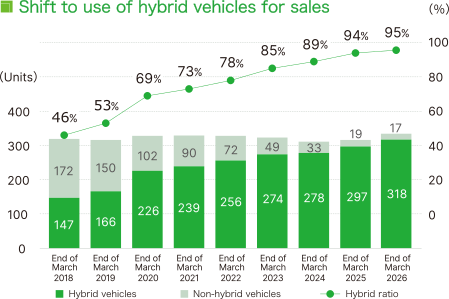
Sales vehicles are an essential aspect of support for our salescapabilities, which is a strength of the ELECOM Group. ELECOM has a large fleet of its own sales vehicles and has been successively switching the fleet over to hybrid vehicles since 2011. Hybrid vehicles now account for 95% of our fleet during the fiscal year ended March 31, 2026, thereby contributing to lower gasoline consumption.
THINK ECOLOGY
In addition to quality control and legal compliance in traditional product development, the ELECOM Group is actively working to reduce the environmental impact of its products throughout their entire life cycle. As part of these efforts, the Group established its own environmental certification standards, "THINK ECOLOGY," with provisional operation starting in October 2021 and official operation starting in April 2022. While the initial implementation was exploratory, the scope of compatible products has been steadily expanded, reaching 12,856 compatible models as of March 31, 2026, accounting for 32% of all models sold.
In 2024, the ELECOM Group announced its purpose, "Better being," setting forth the aim of "the realization of better products and services, a better society, and a better company." Furthermore, the period from FY2024 to FY2026 is positioned as a period for laying the foundation for achieving the medium-term management plan's goal of becoming "a unique global brand from Japan that is loved by our customers." The ELECOM Group is focusing on the environmental issues of "development of eco-conscious products," "waste reduction and recycling" and "climate change response" as key environmental priorities, and is working to reduce CO₂ emissions across the entire value chain. In particular, as a fabless company, the ELECOM Group accounts for 99% of its Scope 3 emissions, and an environmental impact assessment conducted last year revealed that the Group's business activities have a significant impact on the environment related to climate change. Against this backdrop, we have not only focused on reducing CO2 emissions from our own business activities, but also reaffirmed the importance of minimizing the environmental impact of the products we provide to our customers, and we have undertaken a review of the certification approval criteria for our "THINK ECOLOGY" products. In FY2026, the aim is to improve accuracy of Scope 3 emissions through the collection of primary data and to visualize the achievements of THINK ECOLOGY.
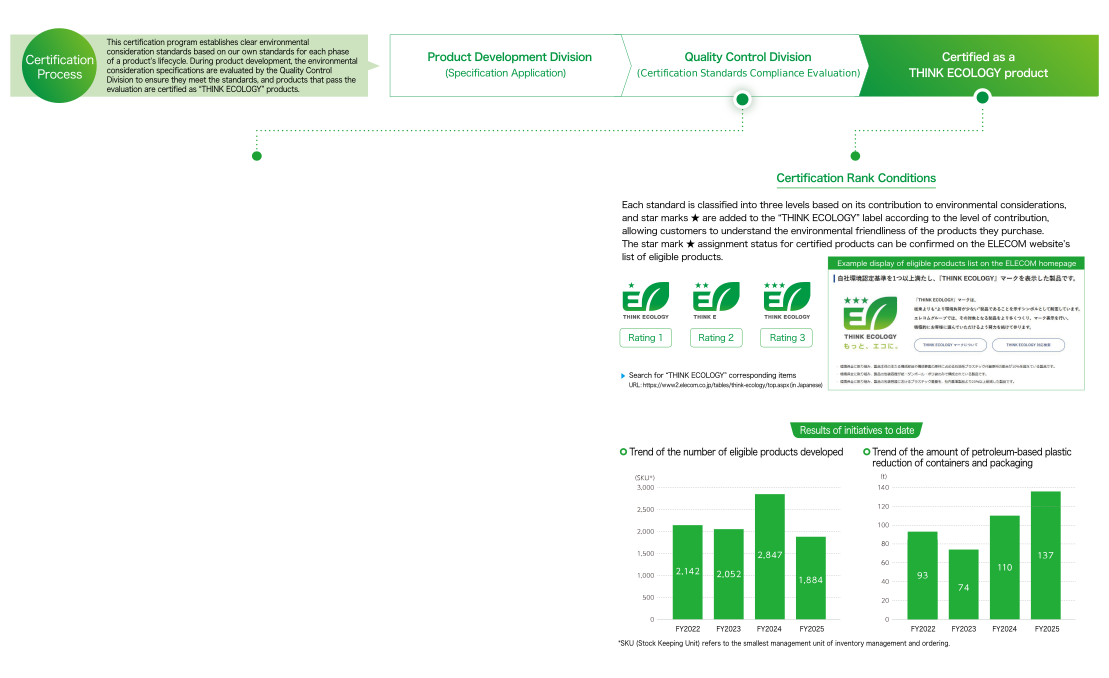
With the 2025 review, we have clarified environmental considerations for each phase of the value chain from a product lifecycle perspective, enabling greater recognition of contributions to Scope 3 reductions during the product development stage. In addition, we have revised and simplified the standards details to make them easier to understand.
| Phase | Considerations | No. | Company environmental consideration certification standards |
|---|---|---|---|
| Raw material procuremen | Use of recycled raw materials | (i) | Committed to environmental conservation, these products use recycled materials for more than 10% of the raw materials used in the primary components of the products themselves. |
| (ii) | Committed to environmental conservation, these products use substitutes for petroleum-based plastics for more than 10% of the raw materials used in the primary components of the products themselves. | ||
| (iii) | Committed to environmental conservation, these products use recycled materials for more than 10% of the raw materials used in the packaging of the products themselves. | ||
| (iv) | Committed to environmental conservation, these products use substitutes for petroleum-based plastics for more than 10% of the raw materials used in the packaging of the products themselves. | ||
| (v) | Committed to environmental conservation, these products use paper materials sourced from sustainable forest resources for their packaging containers or outer boxes. | ||
| Manufacturing | Manufactured using renewable energy | (vi) | Committed to environmental conservation, these products are manufactured at an outsourced factory with a self-sufficiency rate of 20% or more in electricity generated from solar power or other renewable energy sources. |
| Transportation and sales | Environmental considerations for packaging | (vii) | Committed to reducing environmental impact, these products use an outer box designed for improved transport efficiency. |
| (viii) | Committed to environmental conservation, these products reduce the volume of product packaging by 20% or more compared to our standard products. | ||
| Use | Energy saving products | (ix) | Committed to power savings, these products exceed our standards by at least 10%. |
| Disposal and recycling | Reduced usage and reuse of raw materials | (x) | Committed to environmental conservation, the packaging of these products exclusively consists of paper, cardboard and polyethylene film. |
| (xi) | Committed to environmental conservation, the packaging of these products contains at least 20% less plastic than the standard products by weight. | ||
| (xii) | Committed to promoting recycling and reusing, these products are certified with respect to recycling and reusing the primary components of the products themselves after disposal. |
"Phase-Free" is a new concept that aims to free everyday objects and services from the phases (social conditions) of "normal times" and "times of emergency." This should improve the quality of life and protect our lives, regardless of whether it is "usually" or "in case of an emergency." In recent years, the frequency of disasters caused by climate change has been increasing, and this is also attracting attention from the perspective of BCP. ELECOM has been working on the development of Phase-Free products for some time, and in 2025, we were selected for the Phase-Free Award for the fifth consecutive year. As of March 31, 2026, there are 27 models of eligible products, and this number continues to grow every year. We will continue to deliver products that address social issues to our customers.
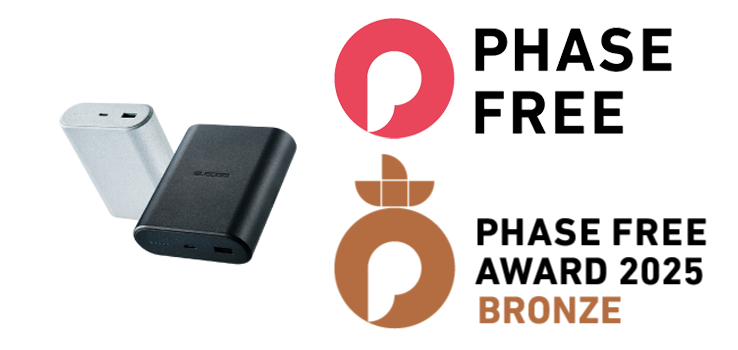
(Selected products) Sodium-ion power bank
▶ https://www.elecom.co.jp/pickup/contents/00113/ (in Japanese*)
(Phase Free Award)
*ELECOM Japan website in Japanese This link provides an introduction in Japanese on the ELECOM Japan website. Cookies and similar technologies may be used in accordance with ELECOM Japan’s Website Privacy Policy (in Japanese).
◆Task Force on Climate-related Financial Disclosures (TCFD)
The TCFD has made recommendations for ensuring stability of financial markets by promoting a transition to a decarbonized society, through identifying and disclosing financial effects of corporate business risks and business opportunities attributable to climate change. Although activities of the TCFD ended in 2023, its recommendations were carried on and have been succeeded by the international climate-related disclosure framework of the International Sustainability Standards Board (ISSB) under the IFRS Foundation.
·In April 2022, ELECOM endorsed the recommendations of the TCFD and joined the TCFD Consortium
·We began analysis and information disclosure based on TCFD starting in our Sustainability Report issued in June 2022
◆KEIDANREN (Japan Business Federation)
A comprehensive economic organization. The organization's mission is to energize Japanese companies and the individuals and regions that support them and to contribute to Japan's independent economic development and the improvement of the quality of life of its citizens.
·Joined in December 2017
ELECOM Group's 2050 CO₂ emissions reduction targets align with KEIDANREN's proposal, "Toward Realizing Carbon Neutrality by 2050."
(▶ https://www.challenge-zero.jp/jp/news/15 (in Japanese*))
*ELECOM Japan website in Japanese This link provides an introduction in Japanese on the ELECOM Japan website. Cookies and similar technologies may be used in accordance with ELECOM Japan’s Website Privacy Policy (in Japanese).
As global population growth and economic expansion continue, concerns over resource depletion and the increase in waste are becoming increasingly acute, underscoring the need for a transition to a circular economy, in which products and resources are kept in circulation and their value preserved for as long as possible. To realize this transition, it is essential not only to address waste at the processing stage, but also to incorporate multiple considerations from the product planning and design stages, including reduced resource use, product durability, ease of repair and reuse, and resource recoverability. In addition, at the waste processing stage, resource circulation should be maximized by prioritizing reduce, followed by reuse and recycle. Building on its existing 3R initiatives, the ELECOM Group is also enhancing the management of sales, production, and inventory planning, together with coordination across sales functions, to promote demand-aligned procurement. Through these efforts, we will continue to reduce excess inventory, curb unnecessary resource consumption, and promote the effective utilization of resources, thereby contributing to the transition to a circular economy.
Replace plastic packaging with renewable packaging, such as paper packaging, and promote reductions in non-combustible waste (1,098 models sold in FY2025)
We strengthened coordination with sales to carry out appropriate procurement in line with demand.
We reduced cardboard material use by shipping in foldable containers at logistics centers in the east and the west of Japan (239 t in cardboard reduction in FY2025)
Directly operate outlet stores (Provide products at a lower price with defective packaging, etc. that cannot be sold to consumers, after first performing inspections to confirm that they have not been opened)
Collect used ink cartridges to facilitate their reuse among manufacturers (1,980,000 cartridges collected in FY2025)
We reduced waste at our Hyogo Logistics Center by selling one-way pallets to reuse vendors (FY2025: 2.5 t of waste reduction)
Appropriate management of waste and recycling of materials
No-cost collection and recycling of used personal computers
No-cost collection and recycling of used lithium-ion power banks (FY2024: Recycling ratio (estimate) 33% *1)
Utilizing the collection system operated by the Japan Portable Rechargeable Battery Recycling Center (JBRC), a general incorporated association that promotes the recycling of small rechargeable batteries, operations are conducted under an appropriate processing system.
◎ELECOM
Since the fiscal year ended March 31, 2023, the amount of logistics material waste at logistics warehouses has been added. Accordingly, we will work to reduce the types of waste that have been on an increasing trend.
| Waste | Unit | FY2022 | FY2023 | FY2024 | FY2025 | |
|---|---|---|---|---|---|---|
| Amount of waste generated | t | 1,508 | 1,458 | 1,403 | 1,410 | |
| Final disposal amount | t | 265 | 289 | 246 | 249 | |
| Recycled amount | t | 1,243 | 1,169 | 1,156 | 1,161 | |
| Materials recycling | t | 65 | 71 | 23 | 14 | |
| Materials recycling (logistics materials) | t | 1,163 | 1,083 | 1,129 | 1,143 | |
| Thermal recycling* | t | 15 | 16 | 5 | 3 | |
| Recycling ratio | % | 82.4 | 80.2 | 82.4 | 82.3 | |
* This recycling process produces high-grade solid fuel primarily from waste paper and plastics, which are not suitable for material recycling.
◎Logitec INA Solutions, Ina Factory·Tescom Denki Matsumoto Factory·Nippon Antenna Kawasato Factory·DX ANTENNA PHILIPPINES, INC.
| Waste | Unit | FY2022 | FY2023 | FY2024 | FY2025 |
|---|---|---|---|---|---|
| Complex waste (waste plastic/metal) | t | 11 | 19 | 33 | 32 |
| Fluorescent lamps | t | 0 | 0 | 0 | 0 |
| Pallets (plastic and wood) and wood | t | 12 | 13 | 17 | 12 |
| Styrofoam and PET trays | t | 15 | 2 | 0 | 5 |
| Waste plastic | t | 6 | 11 | 17 | 11 |
| Used batteries | t | 0 | 0 | 0 | 0 |
| Hazardous waste | t | 0 | 0 | 0 | 1 |
| Glass | t | 0 | 0 | 5 | 4 |
| Waste acid, wastewater, sludge, and waste oil | t | 0 | 0 | 0 | 0 |
| Papers | t | 5 | 5 | 4 | 5 |
| Recycling (complex waste, packaging materials, etc.) | t | 0 | 0 | 37 | 66 |
* In the Philippines, solder scrap, fluorescent lamps, and printed circuit boards are considered hazardous waste.
* Tescom Denki Matsumoto Factory included from FY2024.
With the globalization of supply chains, the management of chemical substances has become increasingly more important. As a fabless company, ELECOM is working to further reduce the environmental impact of its products and strengthen compliance with chemical substance regulations, and in order to achieve this, we are collaborating with our suppliers to implement chemical substance management.
As part of our efforts to reduce our environmental impact, ELECOM began implementing the "ELECOM Co., Ltd. Green Procurement Standards" in FY2024 and is evaluating the implementation status of chemical substance management by our suppliers.
We clarify requirements for our suppliers and substances subject to management, and confirm the status of chemical substance management through surveys. Furthermore, based on the findings of these surveys, we conduct on-site audits as necessary, encourage suppliers to make improvements where necessary, and provide support as needed.
◎Compliance with the RoHS Directive
ELECOM is promoting the development of products that comply with the RoHS Directive. We will continue our efforts to comply with regulations and will also continue to engage in sustainable product development.
◎Green Procurement
ELECOM is committed to managing chemical substances based on the "ELECOM Co., Ltd. Green Procurement Standards."(For details, please see "Promotion of Green Procurement.")
ELECOM is committed to promoting "Green Procurement" in product development to help reduce environmental impact.
As part of this initiative, we launched the "ELECOM Co., Ltd. Green Procurement Standards" in FY2024, and we are evaluating the implementation status of chemical substance management in accordance with management systems such as ISO 9001 and ISO 14001 by our suppliers. The evaluation results are converted into numerical values, and suppliers with low evaluations are encouraged to make improvements, and support is provided as necessary. Substances subject to management in Green Procurement are determined taking into consideration the EU RoHS Directive, US TSCA, and other national regulations based on POPs Convention, as well as ELECOM's own initiatives. We continuously monitor trends in environmental laws and regulations and update our management system for chemical substances contained in our products.
| Classification | Substances subject to management | Definition of classifications |
|---|---|---|
| Prohibited substances | 48 substances/substance groups | Substances that are prohibited to be manufactured or used under domestic and international laws and regulations, and whose intentional inclusion is prohibited for any purpose |
| Restricted substances | 51 substances/substance groups | Substances that are restricted depending on the product's use, purpose and location of inclusion, or content rate |
▶ELECOM Co., Ltd. Green Procurement Standards (▶Japanese ▶English
▶Chinese (Simplified))
At Tescom Denki Matsumoto Factory, we are implementing measures to establish systems and identify and manage the chemical substances we handle in accordance with laws and regulations.
Appointed chemical substance managers and health and safety managers are responsible for conducting chemical substance risk assessments in collaboration with the Health and Safety Committee and relevant divisions. Key initiatives include taking inventory once a year, disposing of unnecessary chemicals, labeling when replacing selected containers and using them for alcohol or other substances, conducting risk assessments using CREATE-SIMPLE, and ensuring thorough communication and compliance, and we are committed to minimizing risks and making steady progress in these efforts.
| Health and Safety Committee | General safety and health manager, safety manager, health manager, Promotion Committee members, (industrial physician) |
|---|---|
| Person in charge of risk assessment | Chemical substance manager, health manager |
| 5S Promotion Committee members | Promotion Committee members selected from each division |
| Department | Person in charge of facilities or person in charge of work and their division head |
At Logitec INA Solutions Ina Factory, we strive to minimize the risks that our business activities pose to our employees and the local community, and have established a system to respond quickly in the event of an accident or other emergency. The factory's main operations are assembly, and since there are no material processing or chemical cleaning processes, the only chemicals used are solvents such as alcohol, acetone, and petroleum ether for product cleaning. Previously, the factory handled 4,4'-diphenylmethane diisocyanate, a raw material for urethane foam packaging, but its use was discontinued in 2022 following the adoption of an alternative cushioning material.
Although the number of chemical substances currently handled at the factory is minimal, we will continue to promote autonomous chemical substance management to minimize risks such as health hazards to employees and the local community.
Compliance with "chemSHERPA"
ELECOM is currently working to ensure compliance with chemSHERPA.
"chemSHERPA" is an information transmission and sharing scheme developed and published by METI in 2015 with the aim of making common and standardizing the format and rules for communicating information on chemical substances contained in products. By using chemSHERPA, the chemical substances contained in products can be managed, and reduce business risks and costs in the supply chain, with safety as a major prerequisite. This allows information on the chemical substances contained in products to be shared throughout the supply chain, making product management and operation more efficient.
Products compliant with "chemSHERPA"

To conserve biodiversity and reduce the impact on nature, the ELECOM Group has been working to regenerate natural forests, reduce CO₂ emissions and waste from its operations, and make its products environmentally conscious. In light of the impact on natural capital identified by ENCORE*1, such as air pollution, emissions of hazardous substances and waste, and the introduction of invasive species, as well as the results of ENCORE, KBA*2, and AQUEDUCT*3 on whether or not our logistics centers and factories are operating in critical areas, protected areas, or areas with high water risk, we will continue to promote biodiversity conservation in cooperation with our suppliers, in addition to expanding our efforts until now.
Using ENCORE, an analysis tool recommended by TNFD, we comprehensively assess nature-related dependencies and impacts arising from our business activities in the form of dependency heat maps and impact heat maps.
| Business activity classification |
Supply services |
Adjustment and maintenance services | |||||||||||||
|---|---|---|---|---|---|---|---|---|---|---|---|---|---|---|---|
| Water supply |
Solid waste treatment |
Soil and gravel retention | Water purification | Other - Atmospheric and ecosystems dilution | Biological control | Atmospheric filtration | Flood control |
Climate regulation | Noise attenuation | Other - Mediating sensory effects (other than noise) | Regional climate regulation | Severe storm mitigation | Water flow regulation |
Rainfall pattern regulation | |
| Battery manufacturing |
M | L | L | M | L | N/A | VL | M | VL | VL | VL | L | M | M | M |
| Manufacture of PCs and peripherals |
L | L | L | M | L | N/A | VL | M | VL | VL | VL | L | M | M | VL |
| Manufacture of household appliances |
M | L | L | M | L | N/A | VL | M | VL | VL | VL | L | M | M | VL |
| Manufacture of other electronic devices |
M | M | L | M | ND | N/A | VL | M | VL | VL | VL | L | M | M | M |
| Manufacture of paper products and packaging |
M | M | L | N/A | L | VL | VL | M | VL | VL | N/A | L | M | M | M |
| Manufacture of plastic products |
L | L | L | M | L | N/A | VL | M | VL | VL | VL | L | M | M | VL |
| Warehouse | VL | ND | M | ND | N/A | VL | VL | VL | VL | ND | N/A | L | L | VL | VL |
| Loading and unloading cargo |
VL | ND | L | ND | N/A | VL | VL | VL | VL | VL | N/A | L | L | VL | VL |
| Business activity classification |
Disturbances (noise, light, etc.) | Greenhouse gas emission | Emissions of non- GHG air pollutants | Discharge of hazardous pollutants to water and soil | Solid waste generation and release | Land use area Water usage | Water usage | Introduction of invasive species |
|---|---|---|---|---|---|---|---|---|
| Battery manufacturing |
M | VL | L | H | L | L | L | N/A |
| Manufacture of PCs and peripherals |
M | VL | L | H | L | L | L | N/A |
| Manufacture of household appliances |
M | M | M | H | L | L | M | N/A |
| Manufacture of other electronic devices |
M | VL | L | H | L | L | L | N/A |
| Manufacture of paper products and packaging |
M | M | H | M | H | L | M | N/A |
| Manufacture of plastic products |
M | M | M | VH | M | L | L | N/A |
| Warehouse | VL | M | L | VL | L | L | L | VL |
| Loading and unloading cargo |
VL | M | L | L | L | L | L | H |
Dependency: Not applicable
Impact: Non-GHG emissions of air pollutants, emissions of harmful pollutants into water and soil, generation and release of solid waste, introduction of invasive species
The ELECOM Group considers it important to assess not only the natural dependencies and impacts arising from its business activities, but also the natural risks associated with business locations adjacent to nature. Therefore, in order to understand the relationship between our logistics centers and factories with large site areas located in suburban areas and the surrounding natural environment, we assess whether we operate in areas where natural capital is in a critical state or within protected areas, as well as the water risks in the region. Beginning in FY2025, we enhanced our risk and impact assessments by shifting to site-level analysis. Whereas our previous assessments were based on country risk profiles, this more detailed approach has allowed us to better understand the specific conditions at each location. Going forward, we will continue our efforts to identify issues and evaluate appropriate responses.
| ENCORE | AQUEDUCT | KBA | |||||||
|---|---|---|---|---|---|---|---|---|---|
| Business location name | Summary | Air pollution | Biodiversity | Soil | Water resources | Major watershed and coastal areas | Water stress | Applicable | Proximity |
| ELECOM Kanagawa Logistics Center |
1 hotspot | Higher | Hotspot | Lowest | Lower | Sagami River | Medium - High | none | 106. Mount Ōyama, |
| ELECOM Hyogo Logistics Center |
No hotspot | Higher | Lower | Lowest | Lower | Yodogawa River | Low - Medium | none | |
| Logitec INA Head Office and Ina Factory |
1 hotspot | Lower | Lowest | Hotspot | Lower | Tenryu River / Toyokawa River | Medium - High | none | |
| Tescom Denki Matsumoto Factory |
No hotspot | Medium | Lower | Higher | Lower | Chikuma River | Low - Medium | none | 118. Northern Alps 120. Yatsugatake Chushin Highlands |
| DX ANTENNA PHILIPPINES, INC. |
1 hotspot | Higher | Lowest | Lower | Lower | Laguna de Bay | Medium - High | none | |
| Nippon Antenna Kawasato Factory |
No hotspot | Medium | Lowest | Lowest | Lower | Ara River / Tama River | Medium - High | none | |
Coverage: 19.6%
Located in one of the hotspots: Kanagawa Logistics Center, Logitec INA Solutions Head Office, DX ANTENNA PHILIPPINES, INC.
In protected areas: Not applicable
Water Stress: Aqueduct indicated that the Group companies do not operate or withdraw water in any areas identified as a high or extremely high risk of water stress.
For packaging materials used for shipments, the ELECOM Group is forging ahead with a switch to cardboard and master cartons certified under an international forestry certification program. As of FY2025, approximately 13% (a 15% increase year on year) of cardboard boxes shipped from the Kanagawa and Hyogo Logistics Centers had been replaced with cardboard boxes made from FSC-certified paper. We will continue to increase the number of packages shipped using certified cardboard, as well as extending its use in product packaging.
Refer to "Responses to climate change."
Refer to "Waste management."
Refer to "THINK ECOLOGY."
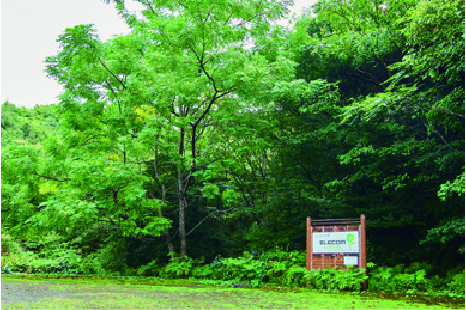
ELECOM FOREST Owase
In addition to the ELECOM FOREST conservation support aimed at promoting natural forest regeneration projects, we have also been further enhancing our natural forest initiatives by supporting conservation activities involving the Maruyama Senmaida Rice Terraces in Kumano City. In September 2020, we entered into a partnership agreement with Kumano City, Mie Prefecture concerning regional promotion and conservation capitalizing on the value of the Maruyama Senmaida Rice Terraces of Kumano City, and have since been making effective use of our mutual resources underpinned by our close partnership and cooperation. In so doing, we have been promoting the region by engaging in Maruyama Senmaida's rice field restoration, preservation, and landscape management, and also by engaging in urban-rural exchange involving ELECOM Group employees and Kumano City residents.